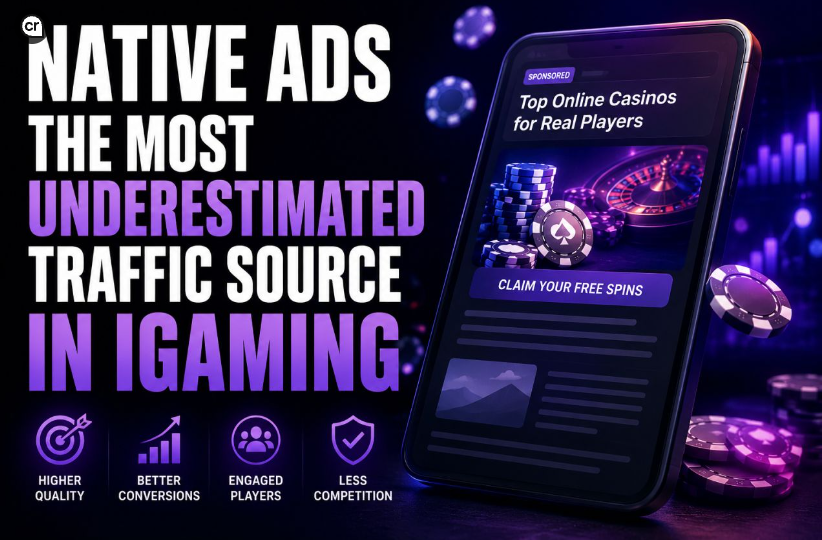
Native advertising is still one of the most overlooked traffic sources in iGaming.
Most operators and affiliates keep pouring budget into push, pop and display. That's exactly why native is less crowded — and why the traffic that comes from it often behaves very differently after the click. In this guide I'll explain how we use native ads for casino and sports betting campaigns, including Tier-1 markets like the USA, and what actually decides whether a native campaign makes money.
What native advertising is (and why it fits iGaming)
Native ads look and feel like the content around them: a recommendation widget under a sports article, a sponsored story in a news feed, a card inside an entertainment portal. Instead of interrupting the user, they sit inside content the person has already chosen to read.
For iGaming that matters a lot. Someone reading match previews, a fight card breakdown or a casino game review is already in the right mindset. You're not creating interest from zero — you're showing up next to it.
Why native works better than aggressive formats
In many campaigns the difference isn't in click volume. It's in what happens after the click.
- Higher engagement. Users click because the story interests them, not because a banner jumped in their face.
- Better intent. Traffic from reviews, comparisons, sports and entertainment content tends to convert and retain better than traffic from pops and redirects.
- Lower competition for inventory. Fewer iGaming advertisers bid on native, so good placements are still available.
- Stronger deposit quality. The players who come through native are more likely to deposit again, which is what really drives player value.
Native is not a channel that works on autopilot, though. You pay for that quality with testing and optimization time.
Native traffic in Tier-1: the USA example
Tier-1 GEOs are where the biggest player values are — and where advertisers usually assume that only Google, Meta or expensive affiliate deals can reach players. Native proves otherwise.
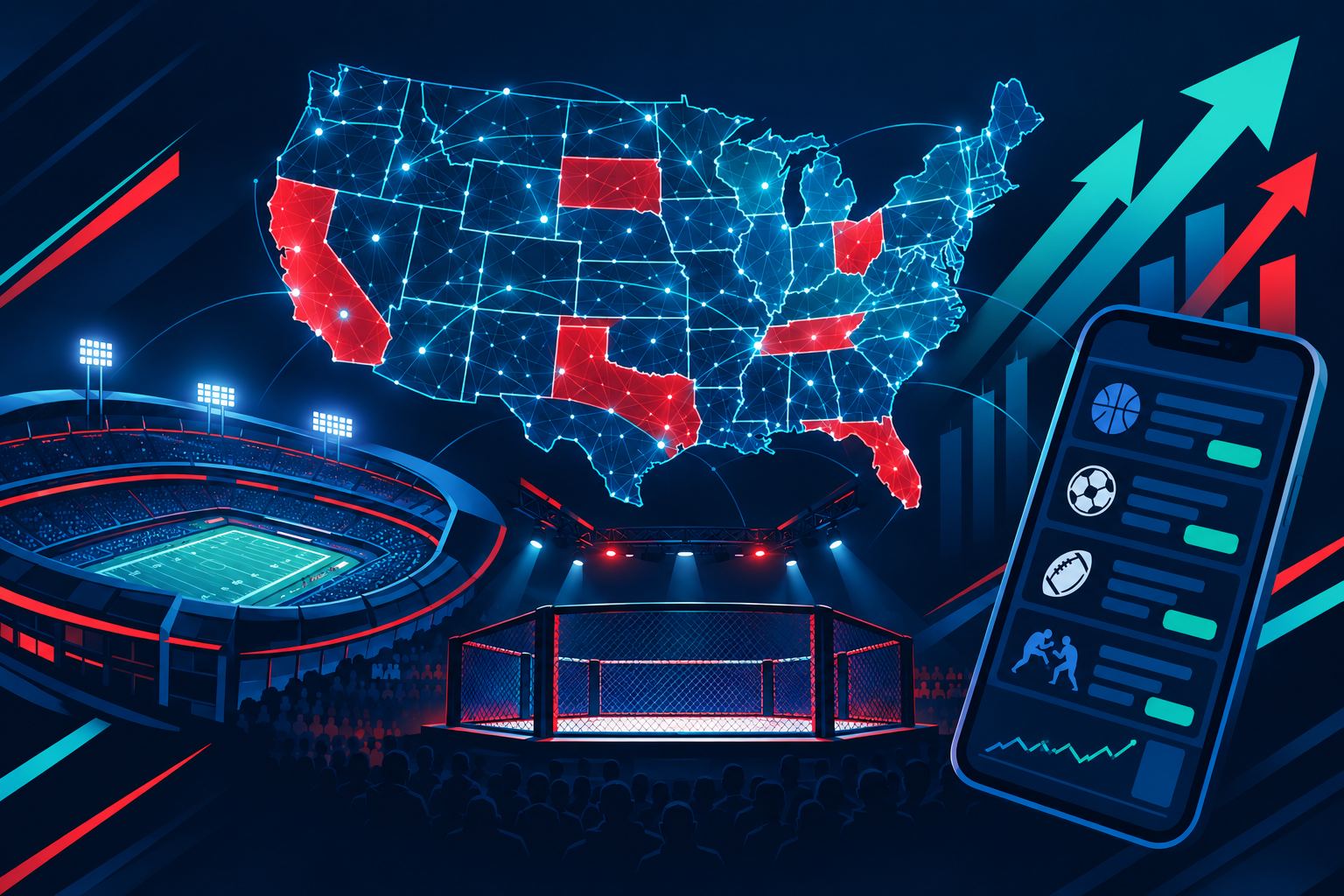
One of our recent campaigns ran USA native traffic around a major UFC event. It started as a pure test: validate the funnel, measure engagement and see how native audiences react to a hyped fight night. The result was 982 registrations from USA native traffic, and with performance holding stable, the campaign moved into scaling. The full story is in our UFC native traffic case.
What made the difference:
- Timing creatives to the event. Angles built around the current hype, not generic "big bonus" messages.
- Audience targeting on sports and fight-fan content.
- Optimizing by user behavior through the funnel, not just by CTR.
Native in Europe: private inventory in Greece
Native is also where you can get access to inventory your competitors don't see. In Greece we work with an exclusive pool of local websites on a CPC model. Over the campaign this inventory delivered 74.2M+ impressions and 133.6K+ clicks — sports betting and casino traffic from local placements, with less overlap than mainstream networks. Details are in our Greece private native traffic case.
For an operator this means two things: fresher audiences and easier testing, because you're not competing with every other casino on the same placements.
How to launch a native iGaming campaign that actually makes money
Here's the process we follow.
1. Start from deposits, not clicks
Set up tracking so you can see registrations, first deposits and repeat deposits by placement. A cheap click that never deposits is the most expensive traffic you can buy.
2. Test several creative angles at once
Sports event angle, game review angle, "how it works" angle, bonus angle. Native rewards curiosity and relevance — the creative that wins is often the simplest one that matches the content around it.
3. Build and refine publisher whitelists
The first days show which sites bring players and which only bring clicks. Cut the weak ones, move budget to the strong ones and keep a whitelist you can scale.
4. Optimize by GEO, device and segment
Tier-1 and emerging markets behave differently. Mobile and desktop behave differently. Split them, measure them separately and don't let a weak segment hide inside a good average.
5. Ride the calendar
Big fights, tournaments and derbies create demand on their own. Prepare creatives in advance and increase budgets around events — we saw the same effect in our World Cup iGaming campaign.
Native vs other iGaming traffic sources
Native isn't the only channel we run. Pops can deliver great CPAs in the right market — in Serbia we saw a $6.40 CPA on pops. Programmatic built for regulated iGaming removes a lot of the platform compliance friction. And in-app traffic gives scale on mobile.
The best setup is usually a mix: native for quality and intent, other formats for scale, all judged by the same metric — deposits and player value.
Who native traffic is for
- Licensed operators looking for players in Tier-1 and growing markets beyond social platforms.
- Affiliates and media buyers who want quality traffic with lower competition.
- Sports betting brands that can build campaigns around the sports calendar.
As for GEOs, we launch traffic in any market — licensing and local compliance stay on the operator's side.
The bottom line
As acquisition costs keep rising across traditional sources, native remains an opportunity many iGaming advertisers still underestimate. Those willing to invest time in testing and optimization often discover a channel that delivers both scale and quality — in Tier-1 markets like the USA and in Europe alike.
Read also: how to buy iGaming traffic: sources, prices and anti-bot checks and iGaming traffic in the USA: native ads and the sports calendar.
Want to test native traffic for your casino or sportsbook? Get in touch — we'll look at your funnel and estimate a CPA forecast. More case studies — in the blog.