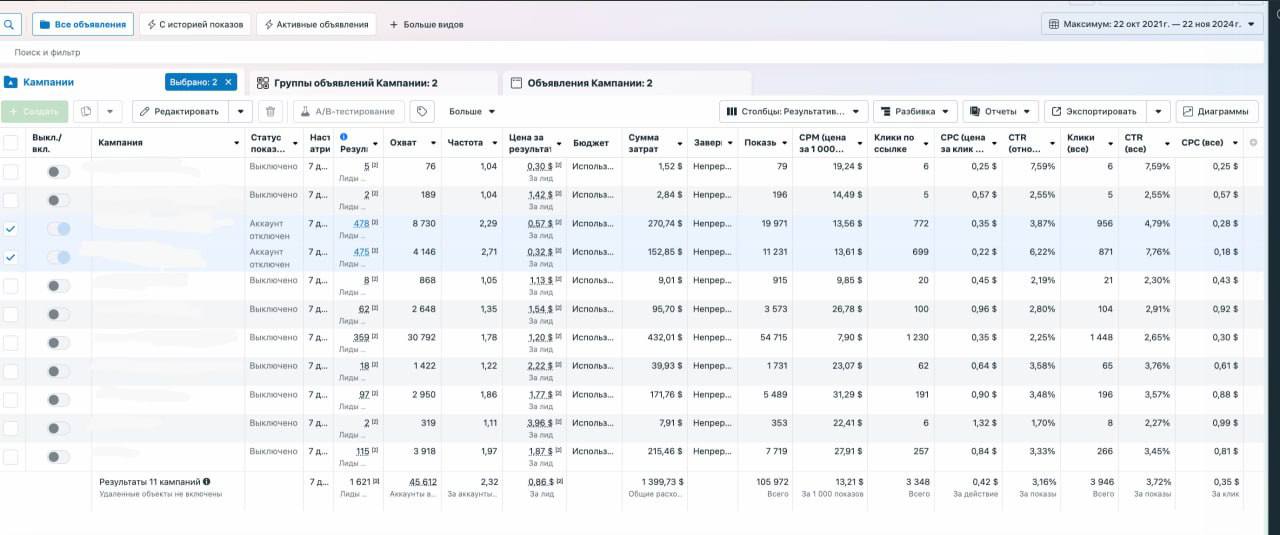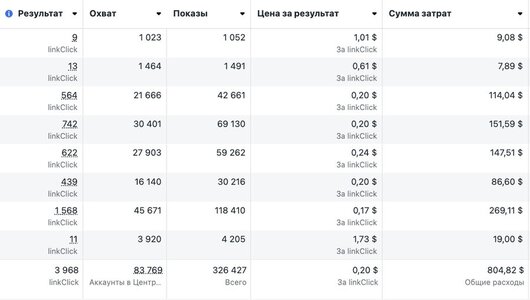
Here's a result we're happy with: we moved traffic for a client from Facebook into their Telegram channel. The channel keeps growing, and every new subscriber comes in at a very good price.
Why push Facebook traffic into Telegram
Facebook gives you massive reach and precise targeting by country, age and interests. But if you send that traffic to a website, most people read for a minute and leave — and reaching them again costs new money.
A Telegram channel works differently. Once someone subscribes, you can talk to them every day — market updates, project news, offers — and every next post reaches them for free. That's why for crypto projects a subscriber is often worth more than a one-time website visit: you can warm them up for weeks and sell to them more than once.
How the funnel works
- Ad on Facebook. A creative built around a clear promise of what the person will get inside the channel: signals, breakdowns, project news. Not "earn money", but "here's what's inside".
- One step to Telegram. The click leads straight to the channel, or to a short page with a single "Join" button. Every extra step makes a subscriber more expensive.
- A channel that looks alive. Fresh, useful posts at the top and a pinned post that explains in ten seconds why it's worth staying.
- Constant optimization. Creatives and audiences that don't bring subscribers get switched off quickly, and the budget moves to what works.
What matters in creatives
- Show the channel's content, not income promises. A screenshot of a real post works better than abstract "passive income" — and passes moderation more easily.
- One message per creative. Market news, education and signals attract different people; test them separately.
- Match language and geo. The ad runs in the channel's language, in the countries where people read it.
- Refresh regularly. Crypto creatives burn out fast.
How to measure the result
Cost per subscriber is only the first number. To see whether the funnel pays off, we also look at:
- How many subscribers are still there after 7 and 30 days — a cheap subscriber who leaves the next day is worth nothing.
- Post reach — whether new subscribers actually read the channel.
- What they do next — open the bot, register, buy a subscription.
Common mistakes
- Sending traffic to an empty channel. A newcomer sees three posts and leaves. Content first, ads second.
- Hard-selling from day one. A channel where every post is an ad loses subscribers faster than it gains them.
- One combination for the whole budget. Without testing several creatives and audiences you never learn what works.
- Looking only at cost per subscriber. Cheap but dead subscribers are worse than pricier active ones.
The result
The client's channel grows steadily, and subscribers come in at a price that makes the channel profitable to scale. Today our average cost for this kind of traffic is around €1 per subscriber from Tier-1 countries — we break down the details in our guide on how to advertise a crypto channel.
FAQ
Can you advertise a crypto Telegram channel on Facebook?
Yes, with careful creatives and landing pages: no guaranteed-income promises, focus on the channel's content. We send traffic straight to the channel or through a short one-button page.
How much does a subscriber cost when moving Facebook traffic to Telegram?
It depends on geo and the channel's topic. For crypto channels with a Tier-1 audience we usually get around €1 per subscriber.
Why is a Telegram subscriber worth more than a website visit?
A visitor comes to a website once; a subscriber sees every next post for free. That lets you warm up the audience and sell to it again without paying for new ads.
Two more Telegram cases: $0.86 per subscriber for a fintech channel and 500 new members for an investment club.
Want similar results for your project? Get in touch, and we'll break down your funnel and estimate a CPA forecast. More case studies — in the blog.